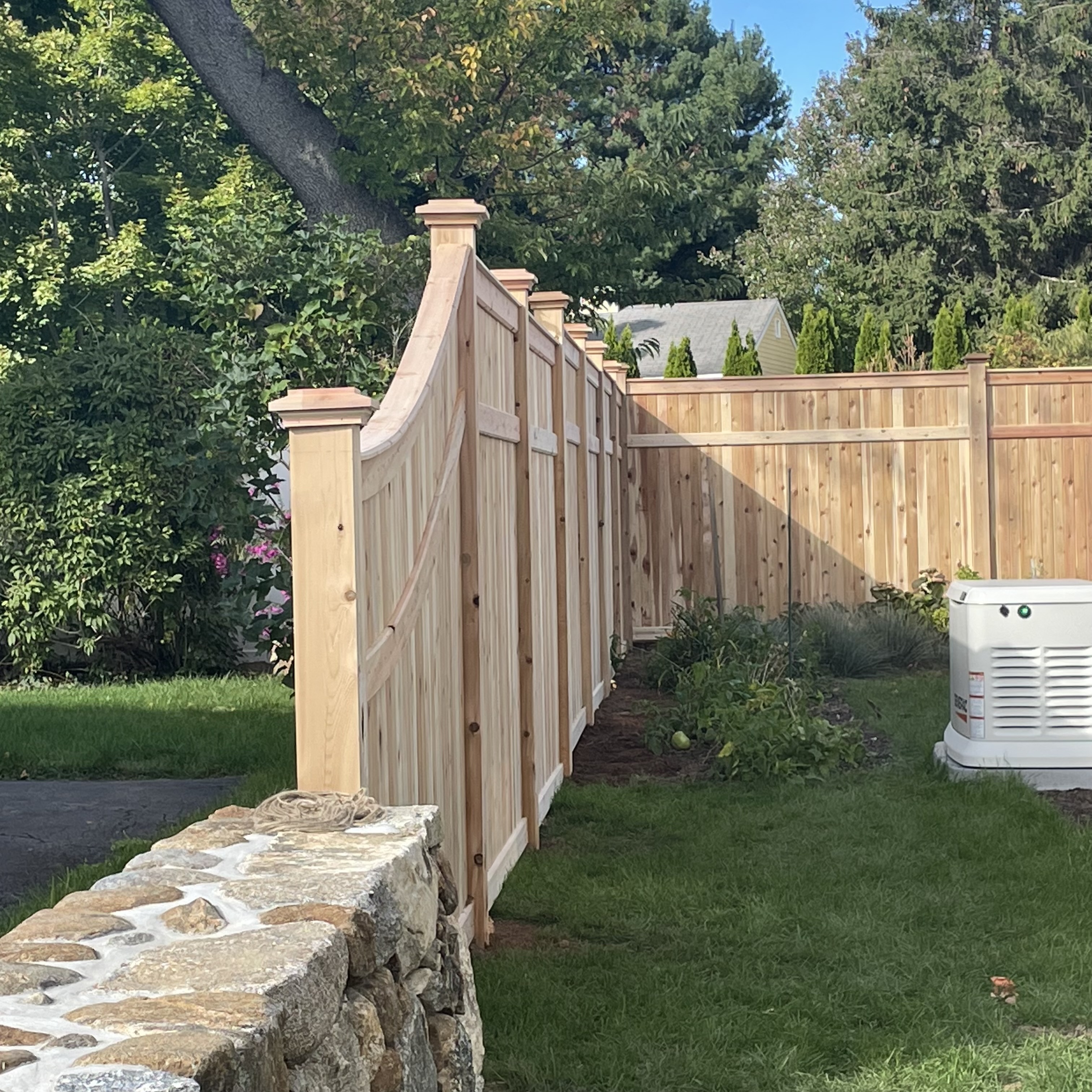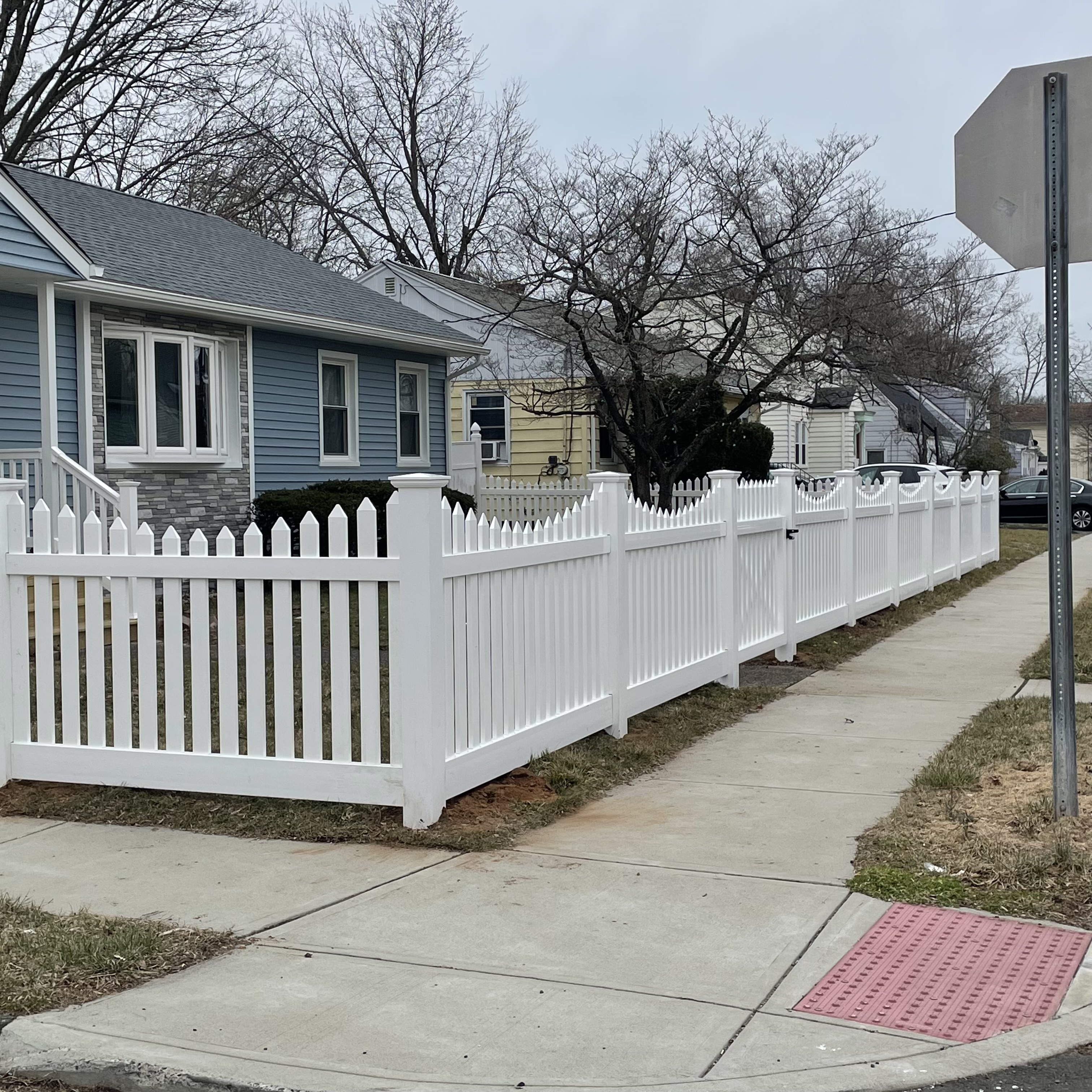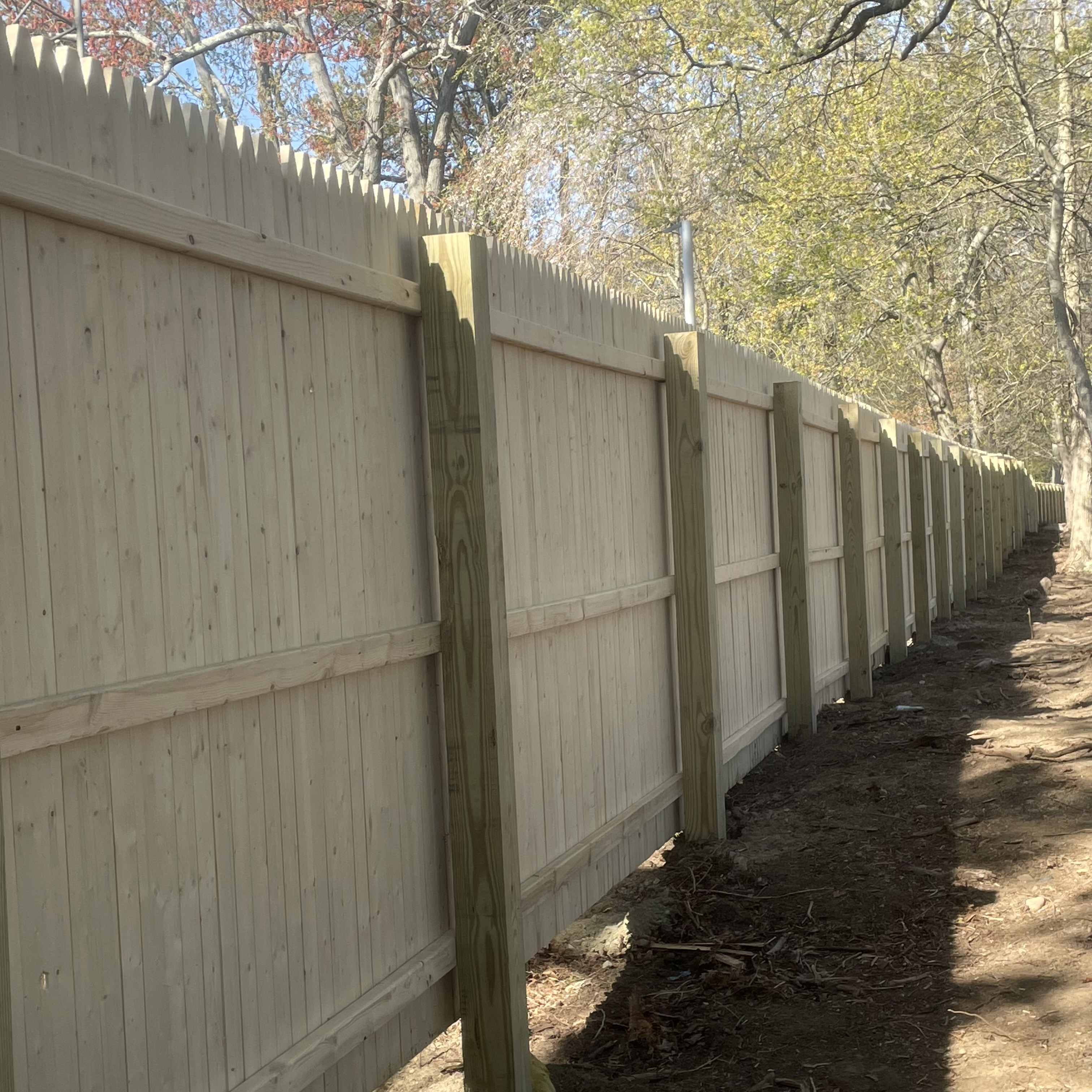
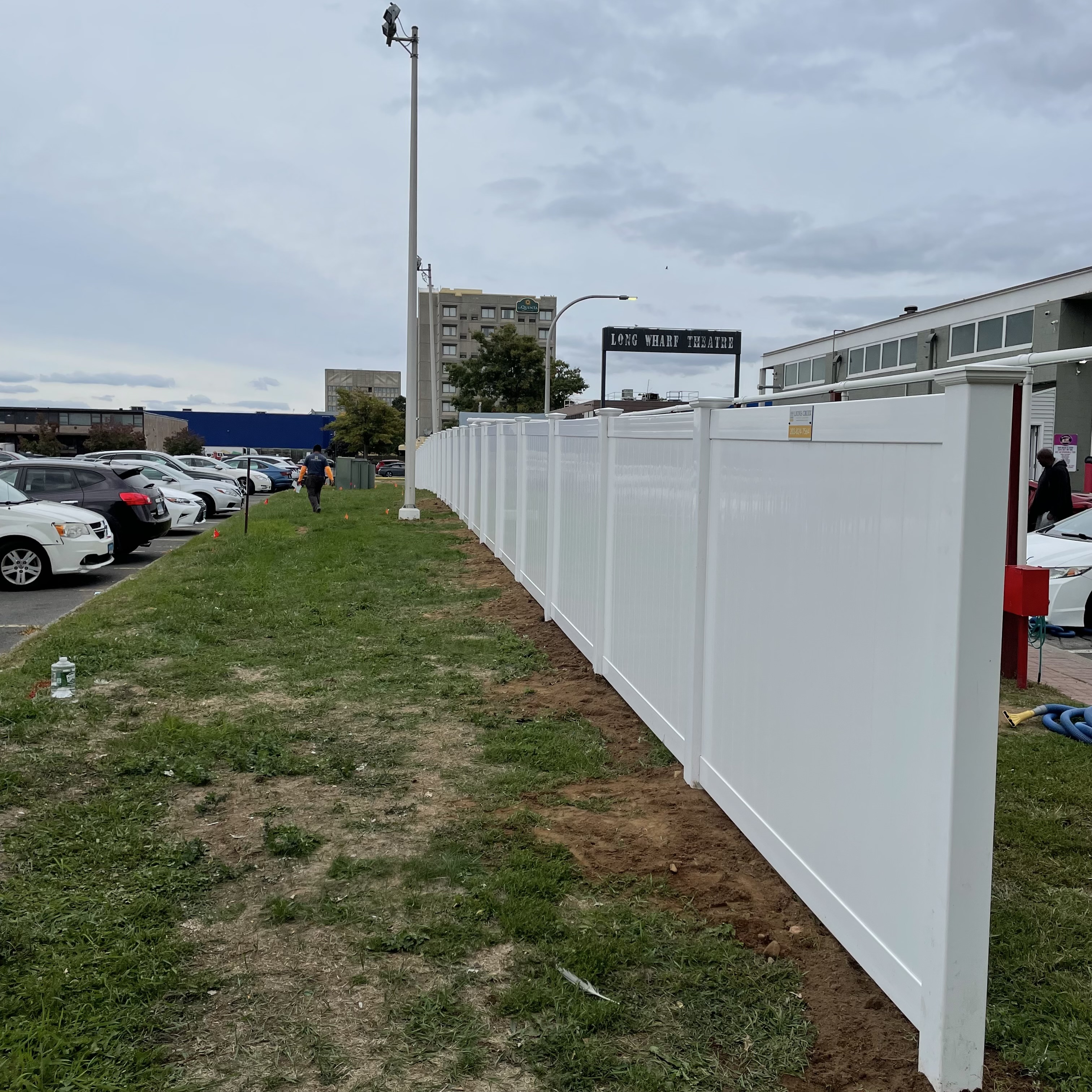
Fencing a home and fencing a business may look similar from a distance, but the goals, materials, and construction details are often quite different. Understanding those differences helps you choose a fence that actually does its job.
Different Goals
Residential fencing usually prioritizes privacy, curb appeal, and safe containment for kids and pets. Commercial fencing tends to prioritize security, access control, and durability under heavier use. The right fence depends on which of these matters most for your property.
Material Choices
Homes often use wood or vinyl for privacy and appearance. Commercial properties frequently rely on chain link for economical perimeter security, with aluminum or iron where a more finished look is needed. The material should match both the use and the desired appearance.
Security and Height
Commercial fences are often taller and built with heavier-gauge materials to deter intrusion. Tension wire and top rails add rigidity for longer runs. Residential fences balance height with neighborhood character and any local or HOA rules.
Access Control
Businesses frequently need vehicle gates, pedestrian access, and sometimes automation for high-traffic entry points. Homes usually need simpler walk and drive gates. Planning access points early keeps the fence practical for daily operations.
Installation Considerations
Commercial runs are typically longer and need robust tensioning and heavy-duty posts. Residential installations focus more on fitting the terrain, matching the home, and meeting local zoning. Both require posts set properly to last.
Which Does Your Property Need?
If you're securing a business, prioritize strength, height, and access control. If you're fencing a home, balance privacy and style with your budget. We handle both residential and commercial projects and can recommend the right approach for your property.